REVIEW · PUERTO VALLARTA
Sea Turtle Release – A Puerto Vallarta Conservation Adventure
Book on Viator →Operated by ECOTOURS VALLARTA · Bookable on Viator
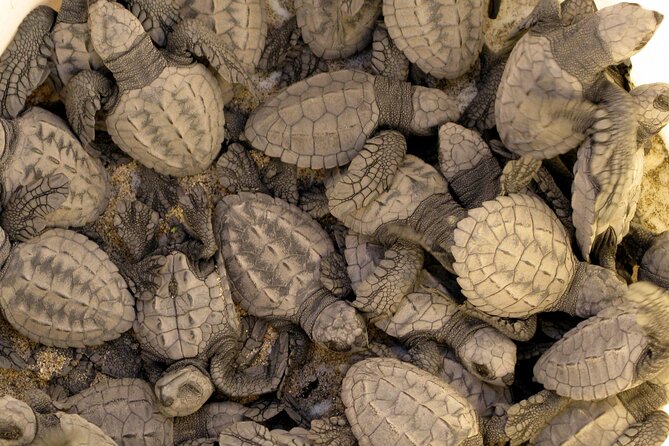
Baby turtles and a beach at dusk.
This Sea Turtle Release experience in Puerto Vallarta is part nature spectacle, part real conservation work, with a bilingual biologist guiding you through the how and the why of sea turtle survival.
I also love that it’s hands-on in a respectful way. You get a short educational talk, then you’re led through the coastal habitat and into the camp where they care for hatchlings and monitor nests.
One thing to consider: you’ll walk about 1 mile total on sand and loose gravel, including a return in low light. If your footing or stamina is limited, this won’t feel great.
In This Review
- Key highlights to know before you go
- From Ecotours Vallarta to the first turtle lesson at 5:00 PM
- The drive and beach walk: mangroves, sand, and getting your footing right
- Sea Turtle Camp: where nest monitoring meets hatchling care
- Sunset turtle release: what you do with the hatchlings
- The return at 7:15 PM: short drive, low-light walk, and restrooms
- What’s included, what you must bring, and how to prep
- Who should book this Puerto Vallarta sea turtle release
- Value for your money: conservation you can connect to
- What if turtles aren’t available or weather cancels the plan
- Should you book Sea Turtle Release with ECOTOURS VALLARTA?
- FAQ
- How long is the Sea Turtle Release experience?
- Is the tour offered in English?
- Where is the meeting point?
- Is mosquito repellent provided?
- How much walking is involved?
- What happens if there are no baby turtles on the day of my tour?
- Is this tour limited to a small group?
- What if weather is bad?
- When will I receive confirmation after booking?
Key highlights to know before you go
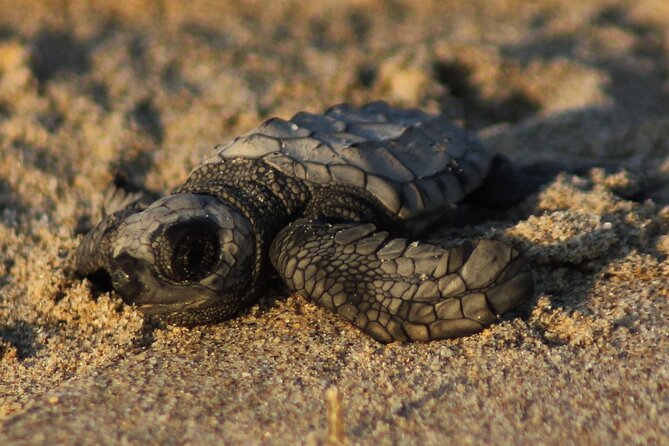
- Sunset release timing so hatchlings can head toward the ocean during safer low-light hours
- Bilingual biologist + camp education on nest monitoring and hatchling care
- Short beach walk through coastal habitat with guide talk on mangroves and the shoreline
- Small group size (max 24 people) for a more controlled, attentive experience
- Real-world conservation support you can connect to immediately by participating in the release
From Ecotours Vallarta to the first turtle lesson at 5:00 PM
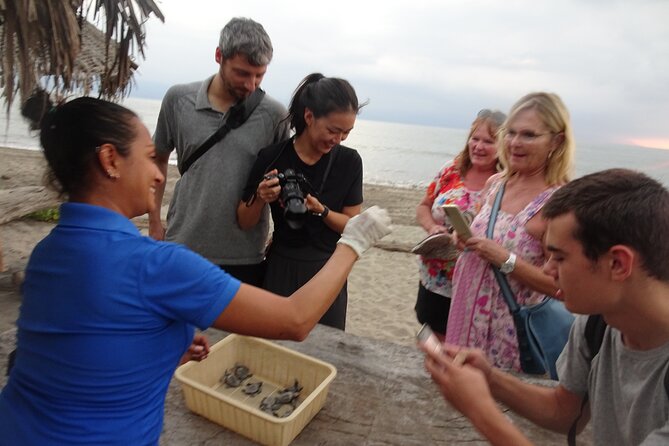
Plan around a late-afternoon start. You check in at 4:50 PM at the Ecotours Vallarta office (near the marina, at Proa 20), then you’ll gather with your guide group for a short, engaging sea turtle talk starting around 5:00 PM. Restrooms are available before you depart, which matters because you’ll be outside for the rest of the experience.
What I like about this early talk is that it gives you context before you ever see the hatchlings. The guide sets the stage with basics about sea turtle biology and conservation, so the release doesn’t feel random or like a cute photo moment. It feels tied to a mission.
You may also see an educational slideshow format during the pre-walk portion. One thing to flag for parents: some tours include non-graphic images related to turtle reproduction. It’s educational, but it’s worth knowing going in.
Language is English, and the guide team includes a bilingual biologist, so you can expect real answers—not vague generalities.
You can also read our reviews of more tours and experiences in Puerto Vallarta.


The drive and beach walk: mangroves, sand, and getting your footing right
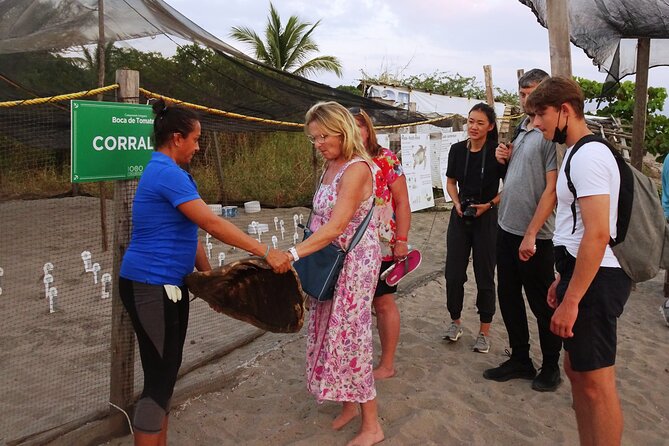
At about 5:45 PM, you’ll board an air-conditioned vehicle for a short drive to the release area. Reviews note the ride can be a bit bumpy at times, but people generally feel safe throughout. Still, it’s a standard van transfer, so if you’re sensitive to motion, a little preparation helps.
Then comes the part that makes or breaks the experience for your body: a gentle but real beach walk. You’ll cover a short stretch along the shoreline—described as about 10 minutes and under half a mile—so you can reach the camp and meeting area.
Your guide talks as you go. You’ll learn about the local coastal environment and mangroves, and you’ll start seeing the ecosystem as a connected whole: nesting areas, sheltered water, and the path hatchlings take toward open ocean.
Practical note: the tour requires good weather and includes walking on sand and loose gravel. Even if you’re generally fine walking on sidewalks, uneven footing on beach terrain is different. Wear shoes with solid grip, not flip-flops.
Sea Turtle Camp: where nest monitoring meets hatchling care
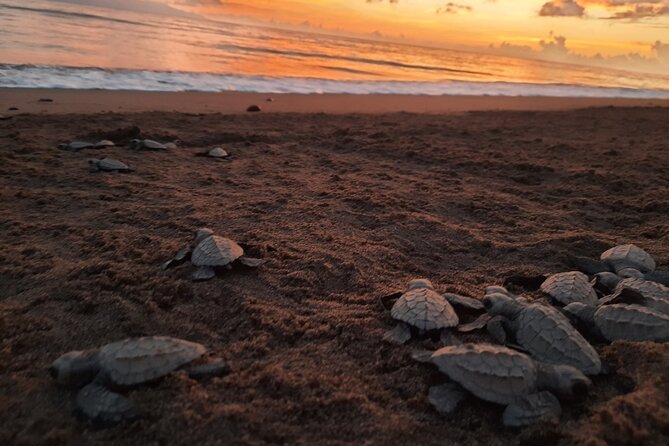
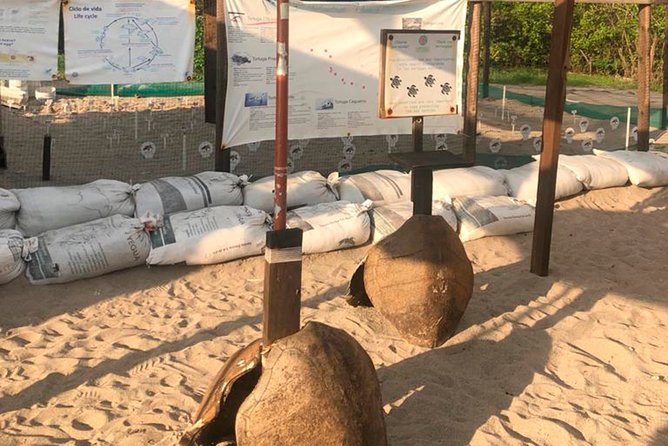
Once you arrive at the sea turtle camp, you’ll be introduced to how the facility supports hatchlings after birth. The camp setting is where the conservation story becomes concrete. Instead of hearing about sea turtles in abstract terms, you see the work: nest monitoring, hatchling care, and the routines that give newborn turtles a fighting chance.
This is one of the tour’s strongest points for me: the education matches what you’ll do next. You’re not just releasing turtles and moving on. You’re learning why that release happens when it does and what the team is trying to overcome.
Also, this is when the mood shifts from classroom to mission. The camp talk helps you understand how humans affect sea turtle populations and why protective efforts matter. Guides such as Michael and Francis have been praised for being friendly and clearly explaining the process, while Maggie is another guide name that’s shown up in recent tours.
And if you’re wondering what you’ll actually witness: you’ll join the group at the camp as they coordinate the release moment later at sunset.
Sunset turtle release: what you do with the hatchlings
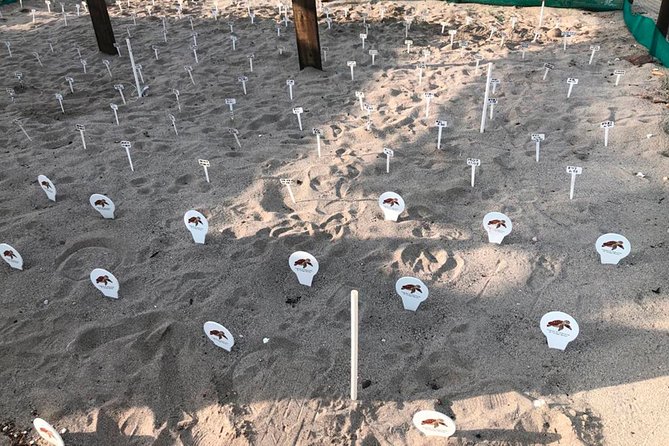
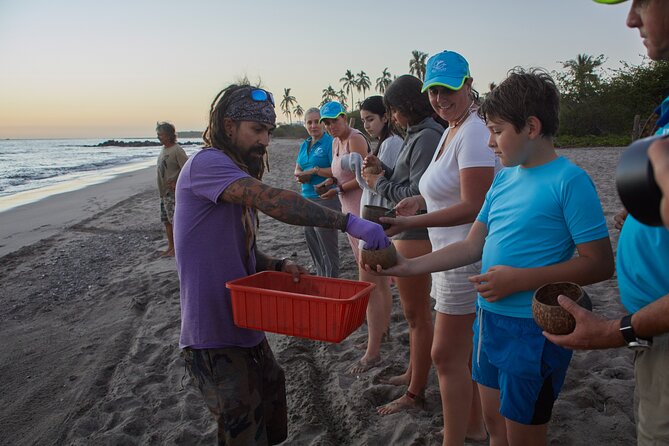
The highlight lands at sunset. You’ll join the biologist at the shore for the special moment: helping baby turtles safely reach the ocean.
Here’s what typically makes the release feel so powerful:
- You’re guided step-by-step, so you’re not guessing what to do
- You get a clear sense of timing, with the release coordinated for low-light hours
- You experience the hatchlings’ instinctive movement toward the sea
Some tours include a chance to name a hatchling before the release. That tiny ritual can make the whole moment feel personal without turning it into a gimmick.
For families, there’s a built-in way for kids to participate. Parents assist children under 7 in carrying a coconut to the sand, and then the hatchlings are released into the ocean. It sounds simple, but it helps young kids feel included while still keeping the process organized and safe for the animals.
Why sunset matters: the team times the release during dusk/night hours to reduce predators’ impact. You’ll hear the reasoning from the biologist during your talk and/or at the shoreline briefing.
If you’re the type who likes wildlife “bonus moments,” keep an eye on the surroundings. On some tours, guides have pointed out things like birds and even crocodiles in nearby water areas during the walk. There’s no guarantee, but the guides do scan the environment as you move.
The return at 7:15 PM: short drive, low-light walk, and restrooms
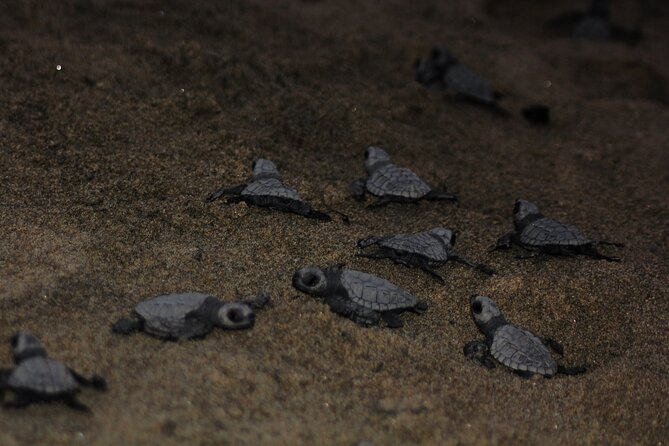
You’ll head back around 7:15 PM to the Ecotours Vallarta office by vehicle. Restrooms and transportation arrangements are available upon return.
The return portion is usually where people notice the difference between a “short walk” on paper and a walk on sand after dark. Several experiences mention that the trek back can be tougher for older visitors, especially in low light, because the sand and rocks are harder to judge.
So if you’re deciding what to wear, don’t only think about the outbound walk. Think about the last 20–30 minutes on the way back. Bring a watch, use your phone light wisely (without blinding others), and walk slowly. The group stays together for a reason.


What’s included, what you must bring, and how to prep
This tour is designed so you don’t have to overthink logistics during the experience. You’re provided:
- Air-conditioned vehicle
- Bottled water
- Snacks: granola bar, juice, and sodas
- A biologist bilingual guide
Not included: mosquito repellent. The importance of bug spray isn’t subtle. It’s essential for comfort and protection.
If you want this to feel smooth, add these practical items to your pack (even if not listed):
- Closed-toe shoes with grip
- A light layer for sunset breeze
- Bug spray
- A small towel or wipes if you get sandy
One more tip: the tour is limited to a maximum of 24 people, so you’ll feel the group pace. Show up a few minutes early for check-in so you start calm, not rushed.
Who should book this Puerto Vallarta sea turtle release
This is a great fit if you want a nature experience that’s both emotional and grounded in real conservation action. It works particularly well for:
- Families with kids who can handle sand walking
- Couples who want something meaningful (not just another beach stop)
- People who like learning from a biologist and not just snapping photos
It’s also a good choice if you like clear structure. The timing is set, you know when the talk starts, when you’ll reach the camp, and when you’ll do the release at sunset.
Who should think twice:
- Anyone with difficulty walking on sand/loose gravel
- People in advanced pregnancy stages (the walking demands make this not recommended)
- Anyone worried about low-light footing during the return
Most people can participate, but the walking requirement is real. If you can’t confidently do about 1 mile total on beach terrain, you’re likely to have a frustrating time.
Value for your money: conservation you can connect to
There’s a difference between animal encounters that feel like entertainment and ones that support conservation you can actually trace. This tour leans hard into the second category.
You’re paying for:
- Guided science education (not just a walk)
- Access to the camp’s conservation work
- The chance to participate in a coordinated hatchling release
And because the release is tied to daily conservation tasks like nest monitoring and hatchling care, your money supports efforts that continue after your visit.
Also, the group size stays capped at 24, which usually means the guide can keep everyone aligned during the most sensitive part of the experience: release time.
In terms of overall satisfaction, it’s a strong performer. The rating is 4.9 with a recommendation rate around 97% based on 120 reviews. That’s not a guarantee of your day, but it’s a good signal that most people leave feeling like they got more than they expected.
What if turtles aren’t available or weather cancels the plan
Sea turtle releases depend on the day’s hatchlings. If there are no baby turtles on your tour date, the sales team will contact you to reschedule your reservation.
This experience also requires good weather. If it’s canceled due to poor weather, you’ll be offered a different date or a full refund. There’s also a minimum number of travelers required, and if that minimum isn’t met, you’ll get the same kind of choice: different date or a refund.
So yes, there’s some natural uncertainty built in—but that’s also part of respecting the ecosystem and working with live conservation schedules.
Should you book Sea Turtle Release with ECOTOURS VALLARTA?
Book it if you want a Puerto Vallarta activity that feels genuinely connected to conservation, not just a one-hour photo stop. The sunset release moment is the emotional peak, and the camp education helps you understand what you’re doing and why it matters.
Skip or reconsider if walking on sand and loose gravel in low light is a problem for you. This tour isn’t “hard” in the hiking sense, but it can be uneven and tiring, especially for people who don’t do well on beach terrain.
If you’re comfortable with that and you bring bug spray and grippy shoes, you’ll likely love how the experience blends science, habitat awareness, and a moment you’ll remember for years.
FAQ
How long is the Sea Turtle Release experience?
It runs about 2 hours (approximately).
Is the tour offered in English?
Yes. It’s offered in English.
Where is the meeting point?
Meet at Ecotours Vallarta, at Proa 20, Marina Vallarta, 48335 Puerto Vallarta, Jal., Mexico. The activity ends back at the same meeting point.
Is mosquito repellent provided?
No. Mosquito repellent is not included, and it’s described as essential.
How much walking is involved?
All participants must be able to walk 1 mile total on sand and loose gravel.
What happens if there are no baby turtles on the day of my tour?
If there are no baby turtles that day, the sales staff contacts you to re-schedule your reservation.
Is this tour limited to a small group?
Yes. The maximum group size is 24 people.
What if weather is bad?
This activity requires good weather. If it’s canceled due to poor weather, you’ll be offered a different date or a full refund.
When will I receive confirmation after booking?
You receive confirmation at the time of booking unless you book within 4 hours of travel, in which case confirmation is received as soon as possible (subject to availability).