REVIEW · PUERTO VALLARTA
Puerto Vallarta Historical El Centro: A Self-Guided Audio Tour
Book on Viator →Operated by VoiceMap Audio Tours · Bookable on Viator
There’s more to Puerto Vallarta’s Malecon than scenery. This self-guided audio tour lets you pace yourself through El Centro while VoiceMap tells you what you’re looking at, from historic landmarks to sculpture stops along the waterfront.
I like two things a lot. First, you get lifetime access to the English audio, so you can redo it when you want and not feel rushed. Second, the tour includes offline access to audio, maps, and geodata, which is a big deal in a city where phone signal can wander.
One thing to plan for: you’ll need your own smartphone and headphones, and since this is self-guided, distractions can make you miss chunks unless you keep moving with purpose.
In This Review
- Key highlights before you start
- How the VoiceMap audio tour works on the Malecon
- Value check: $9.99 for lifetime English access
- Route at a glance: Seahorse start to The Millennia finish
- Stop-by-stop: from Los Arcos to Plaza de Armas
- Malecon kickoff with the Seahorse Sculpture
- Los Arcos Amphitheater: why it was built
- Plaza de Armas: gossip and goods over a century ago
- Art and famous names: galleries, celebrity-era landmarks, and sculpture clues
- Sergio Bustamante Gallery: the sculptor connection
- Peyote People: an older Huichol shop stop
- Vallarta Chocolate and Cigar Factory: local product stop
- Celebrity connections on the route: Villa Leonarda and Casa Kimberly
- Villa Leonarda: Sergio Toledano and famous guests
- Casa Kimberly: the bridge Burton used
- Education, religion, and maritime navigation in one stretch
- Augustine Flores Contreras sculpture: education for all
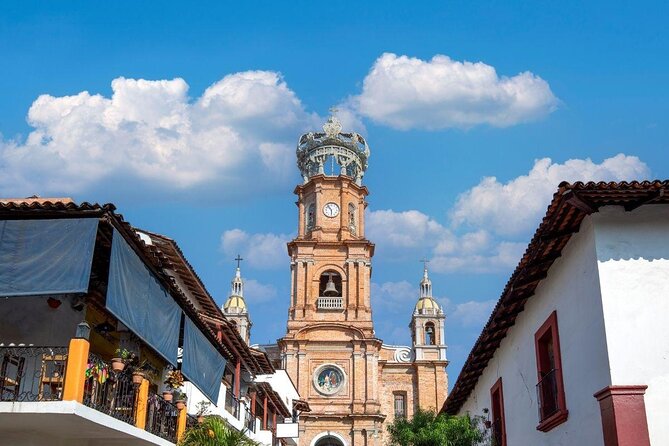
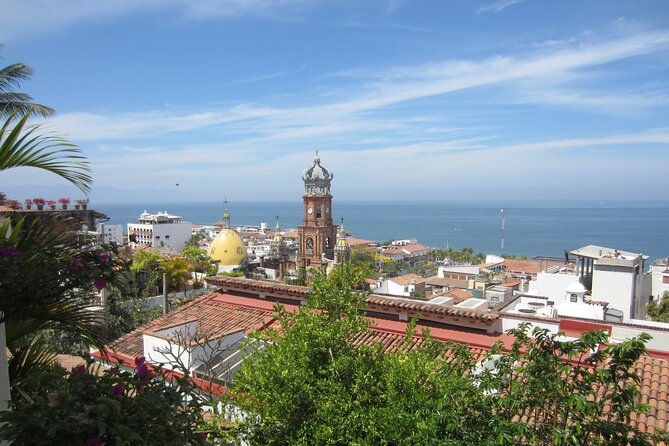
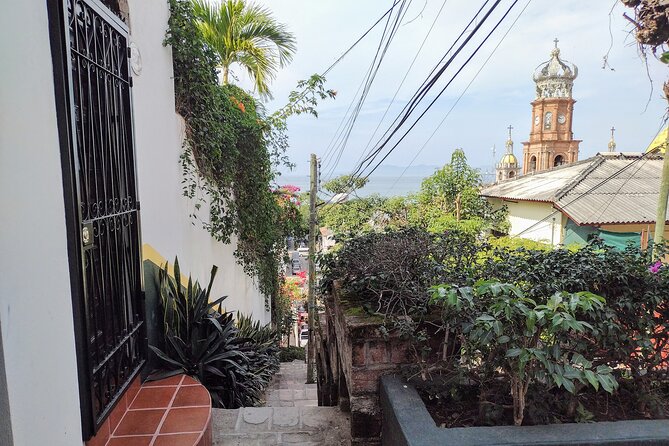
- Church of Our Lady of Guadalupe: 40+ years to complete
- Faro Del Malecon: a signal placed in 1930
- The sculpture gallery you actually walk: 30+ Malecon pieces
- A stretch with about 30 sculptures
- Sergio Bustamonte’s In Search of Reason
- Rotunda del Mar and Nature as Mother (both installed in 1997)
- Flying Papantla sculpture: hearing the story as you pass
- Pace, comfort, and making the audio part actually work
- Wear shoes you trust
- Download before you start
- If you get distracted, keep going in sections
- Who should book this Puerto Vallarta Historical El Centro tour?
- Should you book it? My take
- FAQ
- Is this tour self-guided?
- How long does the Puerto Vallarta Historical El Centro audio tour take?
- What language is the tour offered in?
- Do I need to bring my own headphones?
- Can I use the tour offline?
- Where do I start and end?
Key highlights before you start
- VoiceMap, English, and offline: download once, then follow the route without constantly hunting for service
- A one-hour walk that feels like a story: designed as a smooth loop from the Seahorse area to The Millennia
- Sculptures with names and context: you’ll get explanations for multiple Malecon pieces, not just photos
- Old-town stops in real streets: Los Arcos, Plaza de Armas, and the Church of Our Lady of Guadalupe area
- Culture-and-shopping moments built in: you’ll pass Huichol shop Peyote People and local makers
How the VoiceMap audio tour works on the Malecon
This tour is built around the VoiceMap app for Android and iOS. You start at the Boy on the Seahorse on the Malecon (facing the sea), and then the audio guides you as you walk. In plain terms: you’re not waiting for a group. You’re moving at your speed while the narration cues up as you reach the next spot.
The smart part is the offline access to audio, maps, and geodata. You can save the audio so you’re not stuck doing the classic vacation thing—standing in the heat, refreshing a map, hoping your signal comes back. It also helps you keep your bearings, since the tour is geodata-based, not just a random list of places.
Time-wise, it’s roughly 1 hour to 1 hour 15 minutes. That range matters. If you’re a quick walker and you keep your eyes open, you can cover most of the route comfortably. If you stop for photos a lot (very normal on the Malecon), you’ll still have enough cushion to finish.
You can also read our reviews of more guided tours in Puerto Vallarta



Value check: $9.99 for lifetime English access
At $9.99 per person, this is priced like a low-cost “do-it-now” experience, not a big-ticket guided excursion. And the value gets better because you’re not buying a single ride or timed entry.
What you’re paying for is:
- Lifetime access to the English tour
- Offline audio + offline maps/geodata through the VoiceMap app
You’re also not paying extra for attractions along the way. The tour doesn’t include tickets or entrance fees to museums or other places en route. That means your spend stays predictable—mostly just you, walking shoes, and whatever you decide to buy if you stop inside a shop.
The biggest value tip: if you’re the kind of traveler who likes to return to the same area, this lifetime access is handy. You can re-walk the Malecon section later when the light changes or when you want a different tempo.
Route at a glance: Seahorse start to The Millennia finish
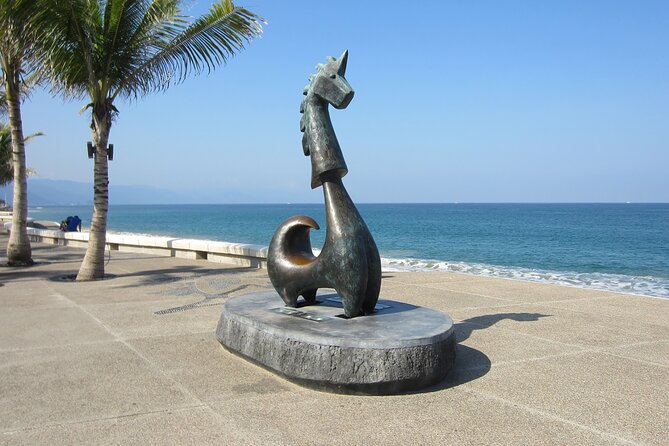
You’ll begin at Boy on the Seahorse, Malecon/Morelos s/n, Centro. That’s a great starting point because the narration starts by putting you right on the water. You get oriented immediately—sea facing, sculpture nearby—so you know what direction you’re working.
The tour ends in front of The Millennia sculpture at C. 31 de Octubre 85, 5 de Diciembre (Centro area). Ending at a named sculpture is useful. It gives you a clear finish line instead of a vague, “somewhere near the center.”
Opening hours are basically open all day (daily from 12:00 AM to 11:59 PM). That flexibility is great, but it also means you should choose your start time based on comfort. If you’re walking the Malecon in the afternoon sun, you’ll want water and a hat.
Stop-by-stop: from Los Arcos to Plaza de Armas
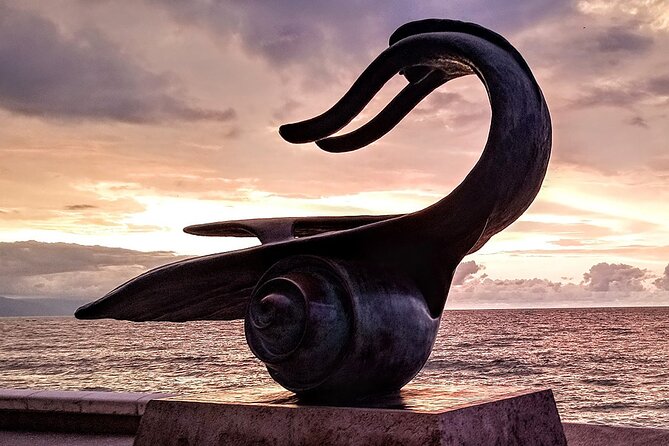
Once you start, the tour flows along the Malecon and through key old-town areas. Here’s what you’ll experience as you walk and why each stop matters.
Malecon kickoff with the Seahorse Sculpture
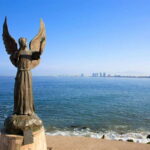
You begin facing the sea with the Seahorse Sculpture as your visual anchor. This is a smart way to start an audio walk because it helps your brain “lock in” the setting. You’re not just hearing facts in a vacuum—you’re seeing the waterfront as you go.
What to watch for: take 30 seconds to look around before you press play. You’ll notice how the Malecon’s design and sculptures create an open-air outdoor museum vibe.
You can also read our reviews of more historical tours in Puerto Vallarta
Los Arcos Amphitheater: why it was built
Next up is the Los Arcos Amphitheater. As you pass, the audio explains why it was built. This is one of those landmarks that looks like it belongs to a postcard, but the story helps you understand its role in the city’s cultural landscape.
Potential drawback: if you’re rushing, amphitheater buildings can blur together with the rest of the waterfront views. Slow down for one clear look so the narration lands.
Plaza de Armas: gossip and goods over a century ago
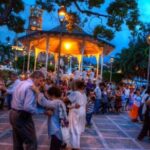
You’ll walk through Plaza de Armas, an old gathering spot where people gathered to gossip and buy goods over 100 years ago. Even if you’re not trying to imagine a “then-and-now” scene, the plaza layout makes the idea easy to visualize: people converging, commerce happening, chatter filling the air.
My practical advice: pause here long enough to see how today’s foot traffic moves. The plaza stories make more sense once you watch the rhythms.
Art and famous names: galleries, celebrity-era landmarks, and sculpture clues
As you continue, the tour shifts from general landmarks into art, notable individuals, and the kind of details that make you feel like you’re in on the secret.
Sergio Bustamante Gallery: the sculptor connection
Passing Sergio Bustamante Gallery, you’ll hear about the famous sculptor while you walk. This works well because you’re not touring the gallery as a museum experience. You’re learning the context so that, later, if you decide to step inside or see more of his work, you’ll recognize the themes.
Tip: take a photo of the exterior or nearby sculptural pieces and compare it later if you visit the gallery on another day.
Peyote People: an older Huichol shop stop
You’ll pass Peyote People, described as one of the oldest Huichol shops in Vallarta. The tour gives you background on the shop and even offers an opportunity to pop inside.
Why this is valuable: Huichol crafts are tied to living cultural traditions, not just tourist souvenirs. Even if you don’t buy anything, stepping inside can add color and meaning to what you’ve been hearing.
What to consider: the tour doesn’t promise a museum-like experience or timed access. If you go in, keep it casual—browse, don’t rush.
Vallarta Chocolate and Cigar Factory: local product stop
You’ll also pass Vallarta Chocolate and Cigar Factory and hear the store story while walking. This is the kind of stop that gives your tour a local-economy feel. You’re learning that El Centro isn’t just scenic. It’s also where businesses live and trade.
Practical note: since tickets/entrance fees aren’t included, this is more “pass-by + learn” than “structured tasting tour.”
Celebrity connections on the route: Villa Leonarda and Casa Kimberly
This is where the tour turns from history into pop-culture breadcrumbs. You’ll pass two villa/hotel-linked spots tied to Sergio Toledano, Liz Taylor, and Richard Burton.
Villa Leonarda: Sergio Toledano and famous guests
You’ll pass Villa Leonarda, owned by Sergio Toledano, who is described as Liz Taylor and Richard Burton’s adopted godson. That’s the sort of detail that sounds like trivia until you realize it changes how you view the architecture and the neighborhood energy.
Why it matters: stories like this help you understand how Puerto Vallarta became a place of international attention, not only a Mexican destination.
Casa Kimberly: the bridge Burton used
You’ll also pass Casa Kimberly and see the bridge Richard Burton used to cross to get to Elizabeth Taylor’s room when they stayed at the hotel.
This is a very “walkable Hollywood history” moment. You’re not standing in a museum display. You’re standing near a feature that people physically used.
Good to know: the tour gives you the key context, but the bridge itself may be more subtle than you expect, depending on your angle. Take a quick look before you keep moving.
Education, religion, and maritime navigation in one stretch
The later part of the tour keeps things grounded with education, long-built churches, and a maritime signal that points to Puerto Vallarta’s harbor world.
Augustine Flores Contreras sculpture: education for all
You’ll pass a sculpture of Augustine Flores Contreras. The tour notes that education for all was championed and financially supported by Contreras until his death in 1975.
This is one of those stops where art becomes a public message. It’s also a nice reminder that Puerto Vallarta’s story isn’t only about sea views and celebrities. It’s about people pushing for change.
Church of Our Lady of Guadalupe: 40+ years to complete
Next is the Church of Our Lady of Guadalupe, which took over 40 years to complete. That kind of timeline does two things for your perspective:
1) it highlights the long-term effort behind major landmarks
2) it makes the church feel less like a “thing you see” and more like a project generations carried
Tip: if the area is crowded, don’t stress. Even a quick look from the sidewalk works as long as you listen to the audio context.
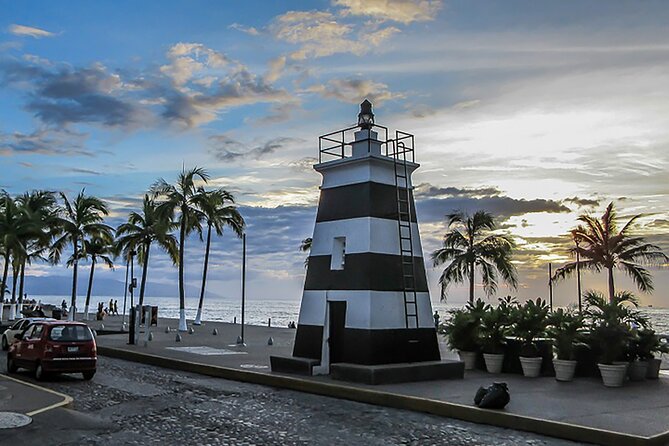
Faro Del Malecon: a signal placed in 1930
You’ll pass Faro Del Malecon, with the audio explaining that the signal was placed there in 1930 to help ships navigate into the rocky harbor.
This is a powerful shift from cultural landmarks to practical history. It reminds you the sea isn’t only scenery. It’s also navigation, danger, and daily work.
Practical advice: slow down here. Maritime stories land best when you can picture the harbor movement.
The sculpture gallery you actually walk: 30+ Malecon pieces
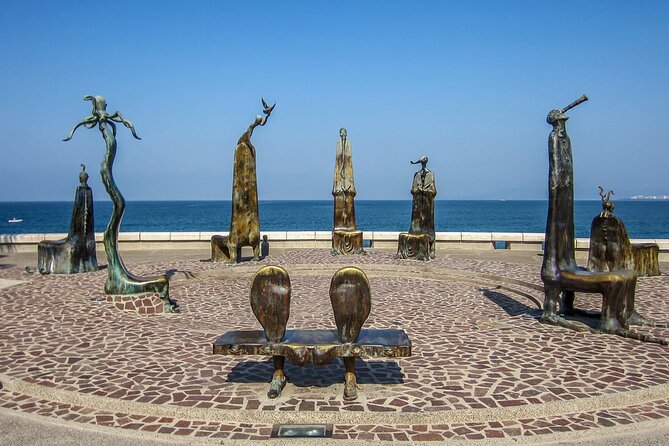
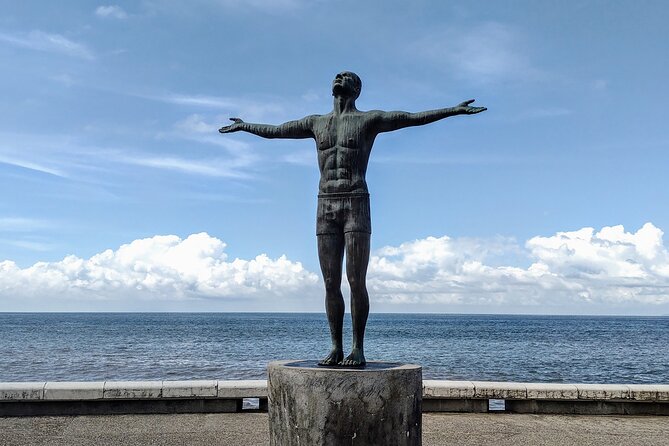
The Malecon is famous for public art, and this tour leans into it by calling out multiple named sculptures you’ll pass. You’ll hear about them while you walk, and the pacing makes it feel like a self-guided open-air exhibit.
A stretch with about 30 sculptures
The tour follows a stretch of the Malecon where you’ll be shown some of the 30 sculptures placed along the walkway. That’s not just for decoration—it helps you “read” the environment.
How to enjoy it more: when the audio cues a sculpture, take a moment to look at its placement. Public art changes meaning based on where it sits: near a view, beside a bend, at a crossing, etc.
Sergio Bustamonte’s In Search of Reason
You’ll pass Sergio Bustamonte’s sculpture, In Search of Reason. Hearing the meaning helps you avoid the common trap: photographing something without understanding what it’s trying to say.
Rotunda del Mar and Nature as Mother (both installed in 1997)
Two additional sculptures come up:
- Rotunda del Mar by Alejandro Colunga, installed in 1997
- Nature as Mother by Adrián Reynoso, installed in 1997
The installation year is a helpful anchor. It lets you think about why public art projects show up at certain moments in a city’s growth cycle, not just whenever someone felt like adding a sculpture.
Flying Papantla sculpture: hearing the story as you pass
Finally, you’ll pass the Flying Papantla sculpture, and the audio explains the Flying Papantla.
Even if you know the general idea already, hearing it right where the sculpture sits makes it stick. You’re building a mental map between art, culture, and place.
Pace, comfort, and making the audio part actually work
This is easy to love, mostly because the setup is low-pressure. Still, a little planning helps a lot.
Wear shoes you trust
It’s a walking route along the Malecon and through streets in El Centro. You’ll want comfortable shoes and a water plan. The tour is only around an hour or so, but you’ll still rack up distance.
Download before you start
Offline access is included, so do your future self a favor. Get the audio and maps ready before you begin, then you can focus on walking.
If you get distracted, keep going in sections
The tour is self-guided, so you’re not trapped in a fixed “must-see all stops” mindset. If you pause for a shop or get pulled into a conversation with someone at a nearby place, don’t panic. Just restart your attention when you can. The route is built around a logical flow, so you can still feel like you got something even if you don’t finish every single segment in one run.
Who should book this Puerto Vallarta Historical El Centro tour?
I think this tour fits you best if:
- you want an easy, independent walk with good stories
- you like the Malecon and public art and want context, not just views
- you want English audio that you can replay later thanks to lifetime access
- you’re traveling on a budget and prefer low add-on costs
It’s also a solid choice if you don’t want museum ticket lines. This is about street-level learning and visual context as you move.
If you’re someone who wants a deep guided lecture with live Q&A, this may feel a bit more self-directed than you’d like. But for many travelers, that’s exactly the appeal.
Should you book it? My take
Book it if you want a fun, low-stress way to understand El Centro without planning a complicated day. For $9.99, you’re getting lifetime English audio plus offline maps and geodata, and the route hits a mix of waterfront landmarks, plazas, public art, and culturally meaningful stops.
Skip it only if you hate self-guided walking or you’re hoping someone else will handle the timing and route decisions for you. Since you bring your own smartphone and headphones, make sure you’re comfortable using your device outdoors.
If your goal is to leave Puerto Vallarta feeling like you actually noticed things—not just passed by them—this audio walk is a smart move.
FAQ
Is this tour self-guided?
Yes. You use the VoiceMap app on your own device and follow the audio as you walk the route.
How long does the Puerto Vallarta Historical El Centro audio tour take?
It’s listed as approximately 1 hour to 1 hour 15 minutes.
What language is the tour offered in?
The tour is offered in English.
Do I need to bring my own headphones?
Yes. Headphones are not included, and you’ll need your own smartphone as well.
Can I use the tour offline?
Yes. Offline access to audio, maps, and geodata is included.
Where do I start and end?
You start at the Boy on the Seahorse in Centro and end in front of The Millennia sculpture.