REVIEW · PUERTO VALLARTA
Make your own Mole Poblano in Puerto Vallarta
Book on Viator →Operated by ChocoMuseo Puerto Vallarta · Bookable on Viator
Mole poblano is work, and it’s fun. This 3-hour class at ChocoMuseo Puerto Vallarta turns mole from a mystery menu item into something you build step by step, starting with a local market run for Mexican cacao and chilies. I especially like how guides such as Zoar and Elias teach you what you’re actually buying, and why those ingredients matter for the final sauce.
One thing to consider: the market area involves cobblestones and the class space has stairs, so it may be tricky if you use a wheelchair or need to avoid uneven footing.
In This Review
- Key things to know before you go
- Why this class is more than a cooking show
- ChocoMuseo Puerto Vallarta as your home base (and why the setting matters)
- The market run: cacao, chilies, and learning to spot quality
- A practical tip for the market part
- Cooking your mole: why the process feels worth the effort
- Lunch with your mole: chicken, rice, and vegetarian options
- Taking mole home: the jar is the best souvenir
- Price and value: does $87.90 make sense?
- Logistics you’ll want to plan for (without the stress)
- Should you book this mole poblano workshop?
- FAQ
- How long is the mole poblano workshop in Puerto Vallarta?
- What’s included in the price?
- Do they offer vegetarian mole?
- Can I take the mole home?
- Is the class offered in English?
- Are there any weather or health considerations?
Key things to know before you go
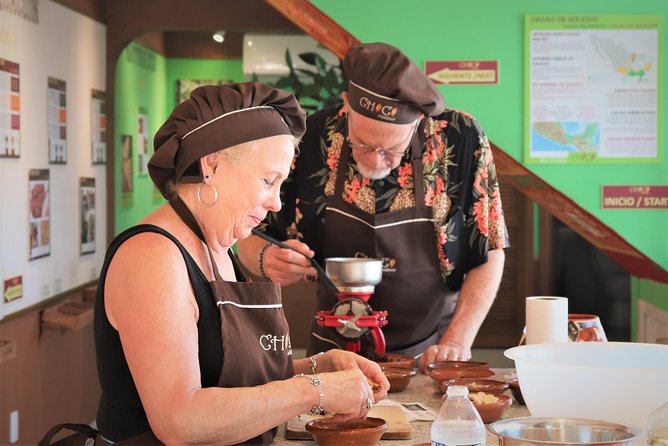
- Small group (max 5): you get more hands-on time chopping, grinding, and assembling.
- Market shopping first: you buy the cacao and chilies you’ll use, with guidance from market experts like Elias.
- Real mole making, not shortcuts: you work with a long ingredient list, including nuts, spices, and cacao beans.
- Lunch plus a take-home jar: you eat chicken (or vegetarian) mole and leave with your own jar for later.
- A kitchen that’s comfortable: reviews highlight clean space and air conditioning, plus good views.
Why this class is more than a cooking show
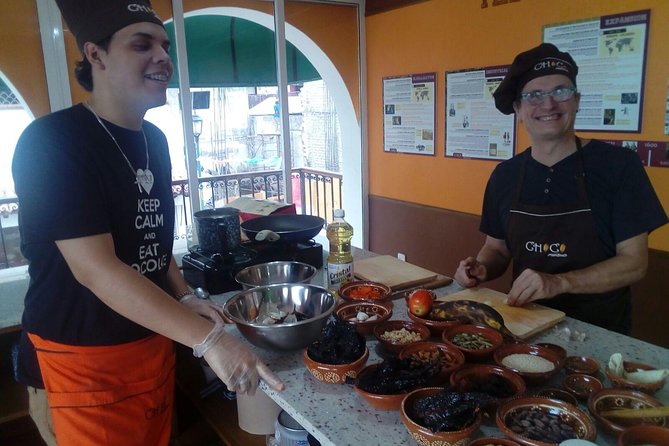
Mole poblano has a reputation for being complicated. That’s why this workshop works: it doesn’t just hand you a finished sauce and call it education. You see how a mole starts with ingredients that can vary a lot, then turns into a thick, layered flavor you can actually taste the reason behind.
I also like the way the class treats mole as Mexican culture, not just a dish. You learn the origin and history of mole poblano while you’re working, so the final result feels connected to the people and traditions that kept it alive.
Finally, the time frame is honest. It’s about 3 hours, and you leave fed and with something practical to bring home. Not every food tour can say that.
You can also read our reviews of more cooking classes in Puerto Vallarta
ChocoMuseo Puerto Vallarta as your home base (and why the setting matters)
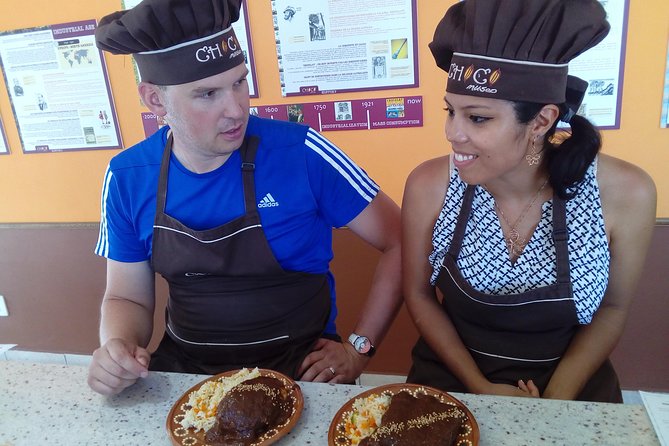
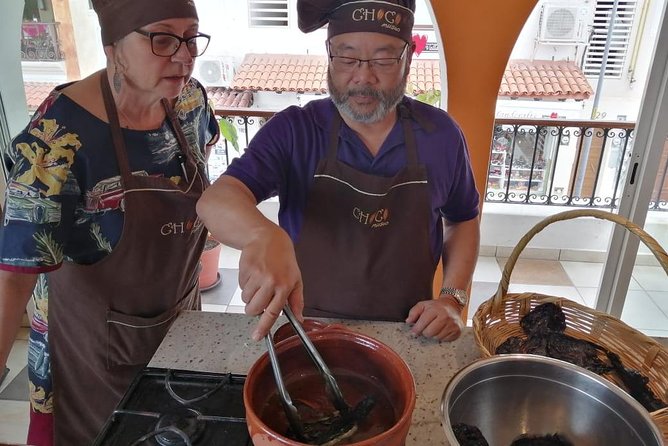
The workshop starts at ChocoMuseo Puerto Vallarta, in Centro (Josefa Ortiz de Domínguez 128). From there, you meet your guides, get your apron and hat for the workshop, and get oriented before you head out for ingredients.
This matters because the cooking phase happens in a real kitchen environment, not a classroom vibe. Reviews mention an air-conditioned kitchen, which helps a lot on warm days, plus a view that can include the Malecón area. It’s easier to focus when you’re not fighting heat.
It also ends back at the meeting point. So you don’t have to solve transportation at the end of your meal or figure out where your taxi leaves you.
The market run: cacao, chilies, and learning to spot quality
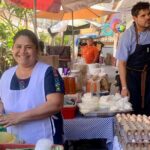
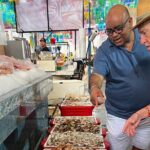
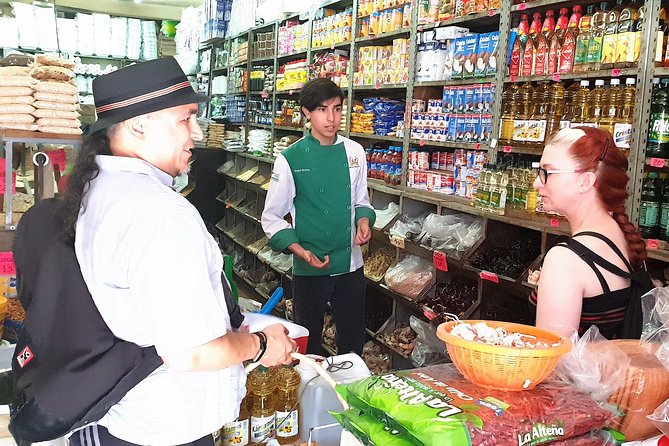
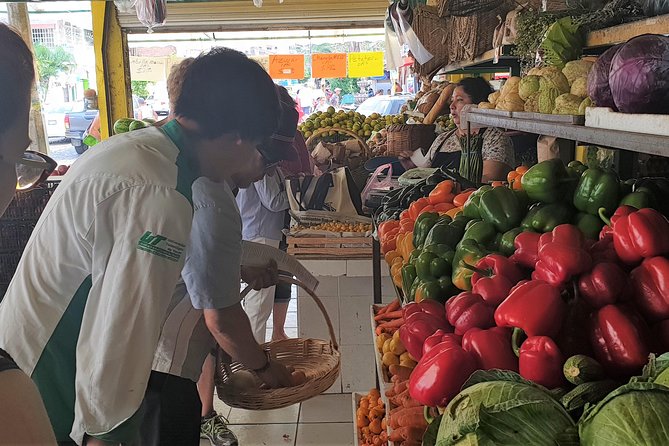
The heart of the experience is the market shopping. You’ll go out with a guide to buy ingredients specifically for your mole—especially Mexican cacao and chilies—so the cooking part isn’t just following directions. You learn to recognize different chilis, which is huge if you’ve only ever seen mole as a jarred product.
One review mentioned that the ingredient run can include stops beyond the main market, like a tortilla factory and a butcher. Even if you don’t hit every niche shop on your day, you’ll get the feel of how food is actually sourced locally.
Here’s what makes this market time useful: you learn what to look for before you commit. With chilies, small differences can change heat level, color, and depth. With cacao, it’s about the flavor foundation. By the time you’re back in the kitchen, you’re not guessing—you’re working with ingredients you chose.
A practical tip for the market part
Bring a curious mindset. If your guide points out varieties, pay attention to what makes them different (taste, aroma, color, intended use). That attention turns mole from an item you eat into one you can recreate.
Cooking your mole: why the process feels worth the effort
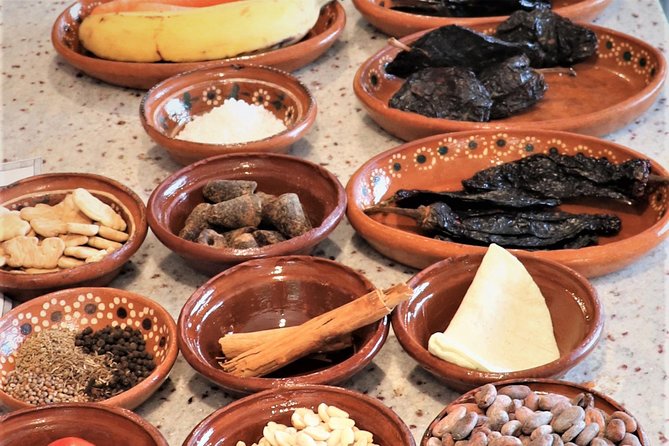
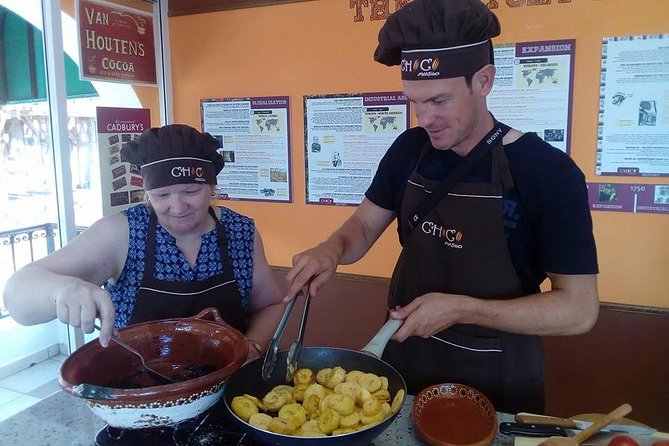
Back at the museum, you start the mole making process in earnest. The class teaches the whole flow, starting from ingredients and moving through building the sauce. You’ll work with more than 25 ingredients, including nuts, spices, and cacao beans—exactly the kind of recipe that explains why mole takes time.
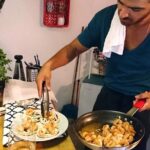
The hands-on parts are where the class earns its reputation. Reviews mention chopping and grinding, including use of a molina (a grinding setup) for spices. It’s not difficult, but it is physical enough that you feel like you contributed to the outcome.
The staff also connect the dots. Instead of treating ingredients as a checklist, they explain what each part does and why you do things in a certain order. That kind of guidance makes your mole taste better and helps you remember what to change if you want to experiment at home.
You also get some cultural framing along the way. Learning the origin and history of mole poblano while you cook is one of those quiet upgrades that turns a meal into a story you can retell.




Lunch with your mole: chicken, rice, and vegetarian options
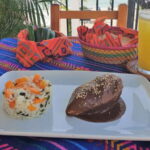
After you put the sauce together, you sit down to eat. Your lunch includes mole poblano with chicken and rice, and there are vegetarian options if you want to skip the chicken.
You’ll also get a non-alcoholic drink made with fruits or plants purchased in the market. That’s a nice touch because it ties the flavors together: you’re not just consuming mole in isolation; you’re tasting what the market brings to the table.
What I like most about the lunch is that it’s not a separate experience. You taste what you made, immediately. If you’ve ever cooked something and wondered if it was actually good, you won’t have that here. The class builds to the meal like a single arc.
And if you’re picky about dietary needs, keep this in mind: at least one review says the class accommodated food allergies and made a gluten-free version. If you have allergies, it’s smart to mention them when you book, so the team can guide you appropriately.
Taking mole home: the jar is the best souvenir
Here’s the souvenir you’ll actually use: you make and take home a jar of your own mole sauce. The jar is meant for the next time you cook at home, not for a quick snack.
Two important notes from the experience details:
- You should plan on packing it in a way that works with your airline rules and checked luggage. One review specifically cautioned against carrying it on.
- Make sure the jar is packed carefully. Mole is thick and the sauce is strong-smelling in a good way, so you’ll want it snug and protected.
Once you have it at home, mole turns into a flexible base. One review said they made mole enchiladas after returning. That’s exactly the kind of “I’ll use this later” payoff that justifies paying for a class instead of buying a bottle at a store.
Price and value: does $87.90 make sense?
At $87.90 per person for about 3 hours, this isn’t a budget cooking stop. But it doesn’t feel overpriced either, because the price includes several things that add up fast if you did them separately.
You get:
- round-trip taxi transfer to the market (the ride is short, about 5 minutes)
- ingredients bought on the market
- the cooking workshop setup (apron and hat)
- a full lunch with rice and mole (plus a non-alcoholic drink)
- and the jar of mole you take home
Most classes give you “food education” and a small taste. This one aims for a full meal plus takeaway. Add in that the group is capped at 5 travelers, and you can see why the per-person value can feel solid: you get time and attention.
If you love Mexican food already, this is a practical step up from tasting dishes. If mole is new to you, this is one of the best ways to understand it without drowning in research.
Logistics you’ll want to plan for (without the stress)
The class runs starting at 10:30 am. You meet at ChocoMuseo Puerto Vallarta and the experience ends back at the same meeting point.
A few details worth planning around:
- The group is small, so arrive on time and be ready to start cooking soon after the market run.
- You’ll be walking briefly around the market area, which includes cobblestones in the route.
- There are stairs up to the class area, based on accessibility feedback.
If mobility is a factor, it’s worth asking about the exact path and number of steps when you book, so you don’t show up on the day and realize it’s harder than expected.
Should you book this mole poblano workshop?
Book it if you want a hands-on cooking experience that feels genuinely Mexican and practical. I’d especially recommend it if:
- you like learning ingredients, not just following recipes
- you want to shop like locals for cacao and chilies
- you want lunch and a take-home jar, not just samples
- you’re traveling in a small group and can enjoy a more personal pace
I’d think twice if you avoid stairs or uneven surfaces. The market walk and the stair access are real considerations, even if the class itself is friendly and guided.
One last deciding point: mole isn’t a quick dish. That’s the point. If you’re willing to spend those 3 hours building flavor from scratch, you’ll leave with a story, a meal, and a jar you can actually put to work.
FAQ
How long is the mole poblano workshop in Puerto Vallarta?
It’s about 3 hours (approx.). It starts at 10:30 am and ends back at the meeting point at ChocoMuseo Puerto Vallarta.
What’s included in the price?
The price includes a tour guide inside the museum and at the market, round-trip taxi transfer to the market, all the market ingredients you buy for the mole, apron and hat for the workshop, lunch (chicken mole with rice, or vegetables for vegetarian options), a non-alcoholic drink made from fruits or plants bought in the market, and a jar of your mole to take home.
Do they offer vegetarian mole?
Yes. The class offers vegetarian options, including a vegetarian version of the meal.
Can I take the mole home?
Yes. You make your own mole and take home a jar. Plan to pack it carefully since it’s designed to travel with you in luggage.
Is the class offered in English?
Yes, it’s offered in English.
Are there any weather or health considerations?
The experience requires good weather, and service animals are allowed. The tour is also near public transportation.