REVIEW · PUERTO VALLARTA
Puerto Vallarta: Baby Turtle Release in Conservation Area
Book on GetYourGuide →Operated by Vallarta Bionature Tours · Bookable on GetYourGuide
A sea turtle release is cute from far away, but this one is fascinating up close. You’ll walk into a local conservation area near Puerto Vallarta to learn how olive ridley turtles are protected, then you’ll see hatchlings head toward the surf at sunset. I like that the experience is built around real conservation work, not just a photo moment.
What I like most is the education. You get a structured talk at the campsite about the turtle life cycle and how workers search for nests and eggs, then incubate them until hatching. I also like the hands-on payoff: you participate in the baby turtle release while the bay views are doing their thing in the background.
One heads-up: if turtles don’t hatch on your reservation date, you may need to reschedule. Also, this is not an easy-going stroll for everyone due to the outdoor walking and the rougher beach-camp terrain.
In This Review
- Key things to know before you go
- Olive ridley turtle release in Puerto Vallarta: what you’re really signing up for
- Getting to the meeting point and the beach area near Marina Vallarta
- The walk to camp: why those 15 minutes matter
- Campsite class: eggs, incubation, and the olive ridley life cycle
- Wildlife viewing on the grounds: seeing conservation in action
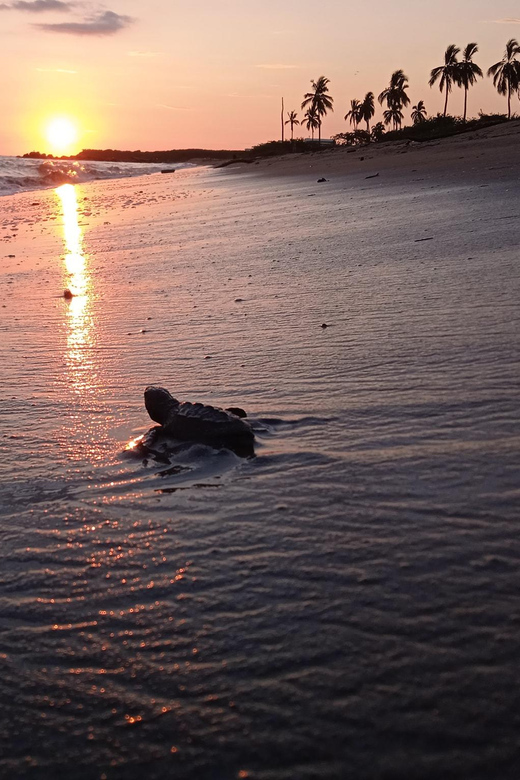
- Sunset hatch watch: the moment baby turtles emerge
- The turtle release: what you actually do, and how to be respectful
- Price and value: is $40 a fair deal?
- What to bring (and what to skip) for a smooth release day
- Who should book (and who should think twice)
- Photos, group energy, and the bilingual guide factor
- Should you book this Puerto Vallarta baby turtle release?
- FAQ
- How long is the Puerto Vallarta baby turtle release tour?
- How much does it cost per person?
- Where is the meeting point?
- Is transportation included?
- What should I bring?
- What if no turtles hatch on my reservation date?
- Is this activity suitable for young children?
Key things to know before you go
- Olive ridley focus: You’ll learn why this species matters and what “endangered” looks like on the ground.
- Real nest-and-egg workflow: You’ll see how workers collect eggs and prepare incubation for hatching.
- Short walks, longer attention: Expect two 15-minute walks plus time in the camp doing wildlife viewing and learning.
- Sunset timing is part of the show: The release happens with scenic bay light, not under harsh midday sun.
- You help with the final moment: The release isn’t just watching; you’ll participate.
- Small-group feel: The tour is designed to keep a group engaged with bilingual guidance.
Olive ridley turtle release in Puerto Vallarta: what you’re really signing up for
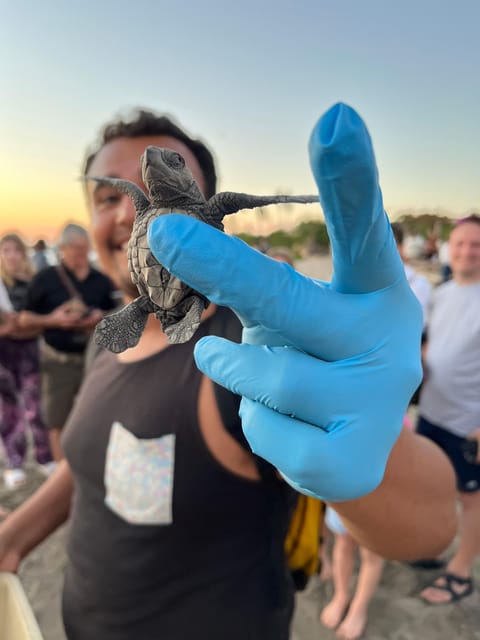
This is a 2.5-hour conservation experience with a simple goal: give olive ridley sea turtles a better chance at survival. The tour is run through Vallarta Bionature Tours, and the day is paced so you’re learning while you’re there, not just arriving for the dramatic part at the end.
You start with a short walk (about 15 minutes) into the natural area, then you’ll spend serious time in the camp learning how conservation workers protect nests and manage the incubation process. That matters because sea turtles face threats long before a hatchling reaches the ocean—things like nest disturbance and survival odds once the babies emerge.
The release itself is the emotional payoff. You’ll watch hatchlings emerge from eggs and then participate as the babies make their way down to the water. People often remember this part because it feels like a living chain reaction: conservation work earlier in the season translates into a moment you can actually witness.
You can also read our reviews of more tours and experiences in Puerto Vallarta.


Getting to the meeting point and the beach area near Marina Vallarta
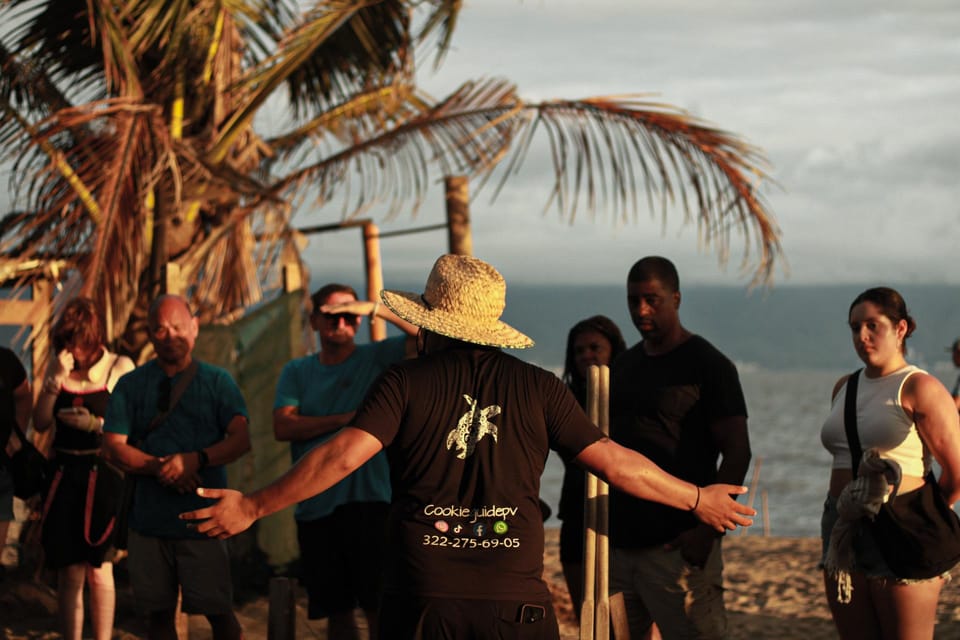
Transportation is not included, so plan on getting yourself to the meeting point first. The tour meeting location is at the end of Paseo Bocanegra street, and the easiest access is through the Marina Vallarta area.
Here’s the practical route logic: from Marina Vallarta, access via Albatros street, cross Paseo bocanegra, then go straight ahead until the end. You should spot a golf course, a wall with drawings, and the beach at the end.
If you arrive early, don’t improvise the walk to the campground alone. Wait where the guide expects you to meet the group. It’s one of those situations where a few minutes of patience beats an hour of wandering around a beach-area edge.
You’ll also likely notice that the beach area is more “out there” than the main hotel strip. One review notes that it’s near where airplanes take off, which is a good reminder: this is a working conservation site, not a curated beach club.
The walk to camp: why those 15 minutes matter
You’re walking roughly 15 minutes from the meeting area to the conservation site. That portion sounds minor on paper, but it helps set the tone. You’re transitioning from road-and-resort life into a natural workspace where the guide can explain what you’re about to see.
Wear comfortable clothes you don’t mind getting sandy. You’ll be outdoors, and you’ll probably do short pauses for instruction and wildlife viewing. In other words: don’t dress for pretty pictures only.
This is also one reason the tour is listed as not suitable for people with low fitness or certain health conditions. If you know you get winded easily, or you’ll struggle with walking on uneven ground, take that seriously. There’s no dramatic hinting here—this is active time outdoors.
Campsite class: eggs, incubation, and the olive ridley life cycle
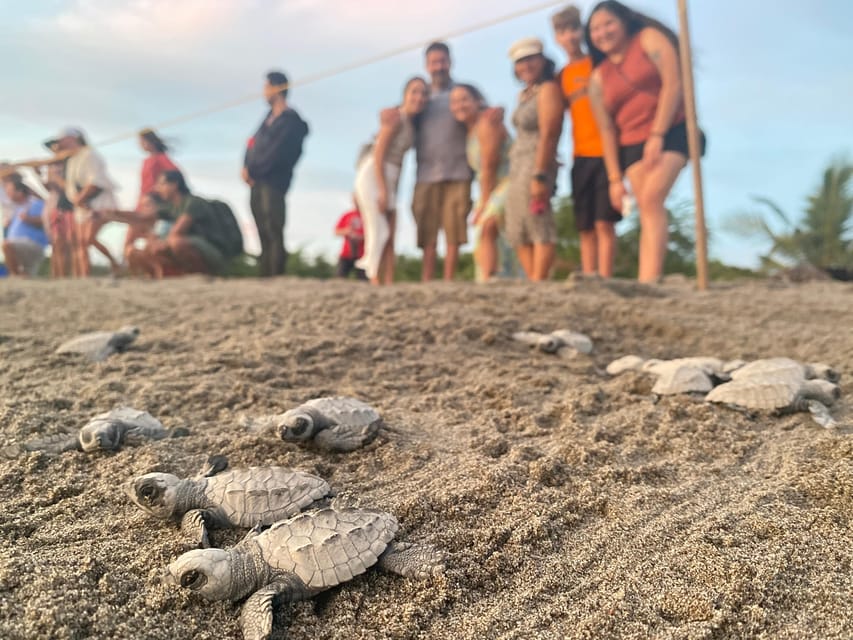
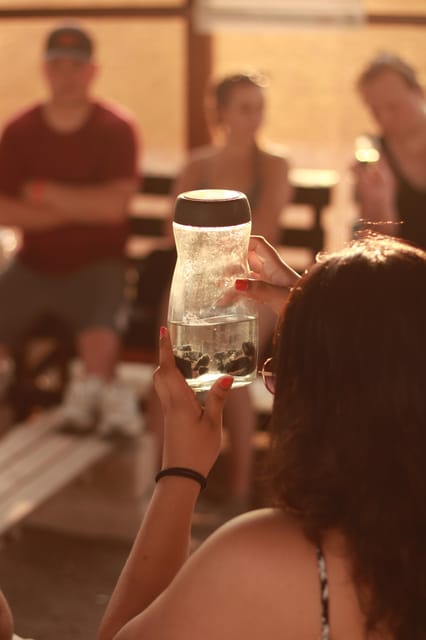
The main learning block happens at the campsite during a 45-minute class. This is where the experience becomes more than a feel-good activity.
You’ll learn the turtle life cycle with a focus on what’s happening during nesting and early development. Then you’ll connect that to the conservation workflow: how conservation workers search for nests and eggs, and how eggs are collected and incubated in the conservation area until hatching.
I love this part because it gives you context for what you’ll later see at the release. When you understand the incubation logic, the hatch moment stops being random magic. It becomes the end result of careful handling and timing.
Expect bilingual instruction. The tour runs with a live guide in English and Spanish, and guides named Eduardo (often referenced as Eduardo or Eddie), plus Carlos and Tony in different groups, are known for mixing education with an energetic group vibe. You’ll be able to follow along even if your Spanish is limited, since the guidance is live and responsive to the group.
One more practical note: bring biodegradable sunscreen. You’re going to be in a sensitive outdoor environment where you want to keep products turtle-friendly.
Wildlife viewing on the grounds: seeing conservation in action
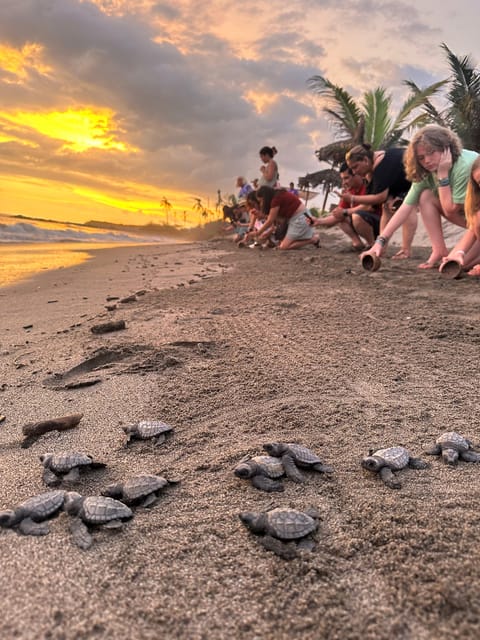
After the classroom time, you’ll spend about 20 minutes on wildlife viewing in the area. This is when the tour shifts from information mode into observation mode.
The point isn’t to guarantee a specific animal sighting. The value is that you’re learning to look—toward nesting areas, the general natural habitat, and the rhythms of the site where conservation work happens. It also helps keep the group engaged before the emotionally charged finale.
This is a good time to ask your guide questions, especially if you want to understand the difference between turtles you might see in the ocean and turtles that are nesting or hatching close to shore. The better your questions, the more “you get” out of this segment.


Sunset hatch watch: the moment baby turtles emerge
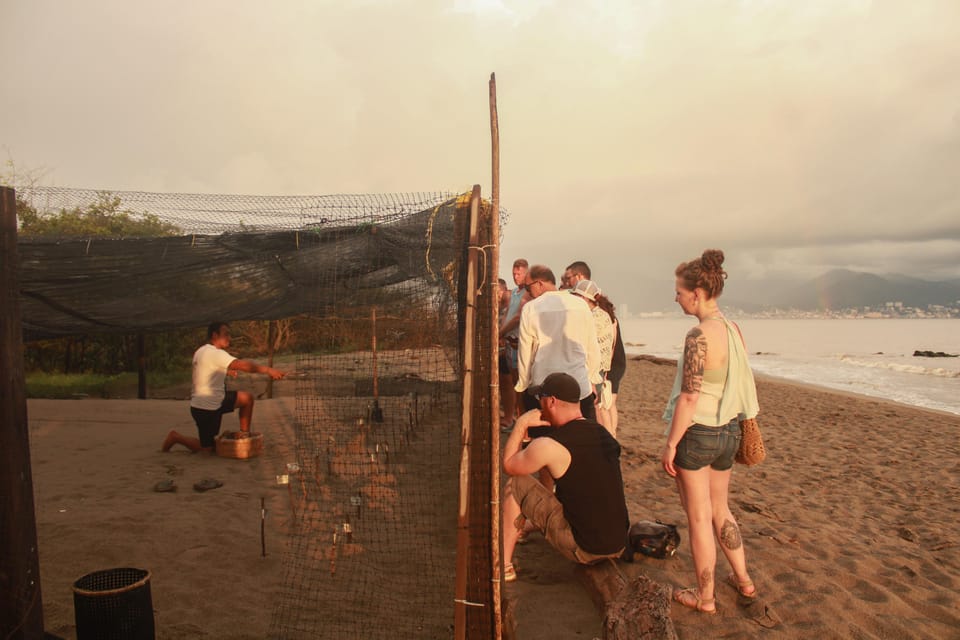
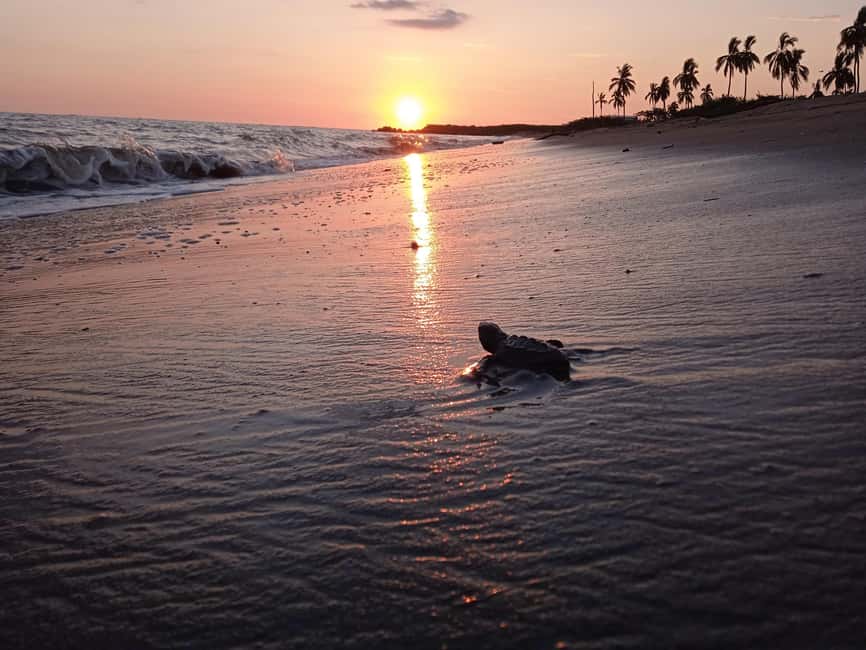
Then comes the part people talk about most: a scenic sunset over the sea. You’re positioned for bay views while the natural spectacle happens—watching hatchlings emerge from their eggs.
Timing is tied to the day’s hatch results. If turtles hatch on your tour day, you’ll experience the full flow: emergence, movement, and release. If not, the tour offers a reschedule or cancellation option. That’s a key consideration when you’re planning your Puerto Vallarta itinerary, because this is weather-dependent and wildlife-dependent in the simplest sense.
On a slightly stormy day, you might get through it. One review specifically mentions that rain gear was provided and that the storm passed quickly enough to still catch the sunset before the hatchlings headed toward the ocean.
Be ready for the sensory reality of the beach at that hour: cooler air, changing light, and a crowd keeping quiet in that respectful way people do when something rare is unfolding. If you show up mentally prepared, you’ll enjoy it more.
The turtle release: what you actually do, and how to be respectful
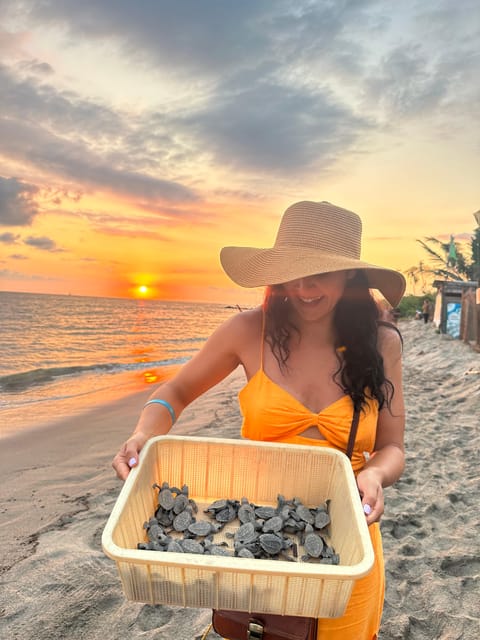
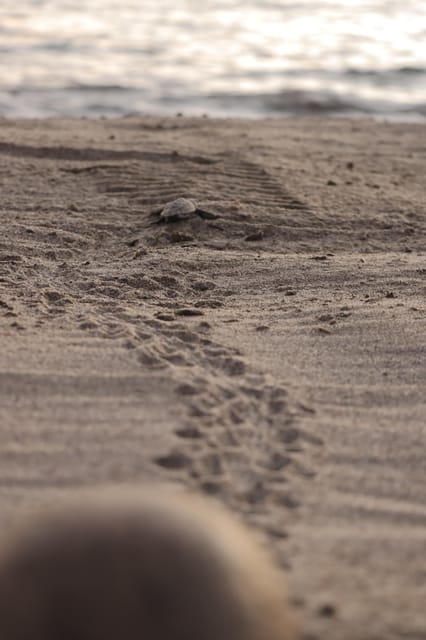
The release is the finale, and it’s also the core “bucket list” moment. You’ll each get to participate in sending baby sea turtles toward the ocean.
You’ll be guided on how to handle your moment so the babies can move on naturally. This isn’t a hands-on petting experience. The “best practice” here is restraint: you follow the guide’s instructions, you keep attention on the hatchlings, and you give them space to start their journey.
Many people name their hatchling and make a wish or a prayer before release. Even if you don’t do that, I’d treat it as a serious moment. Turtle conservation depends on careful, calm handling. Your behavior affects the experience more than you’d think.
Also: photography is part of the program. The tour includes photos, and a photographer is present. Some people say they received a link to downloadable pictures; others mention there may be extra costs for keeping certain photo formats. The safe assumption is that you’ll be photographed, but if you care about owning prints or specific edits, ask the guide what’s included and what costs extra before the session starts.
Price and value: is $40 a fair deal?
At $40 per person for a 2.5-hour experience, this sits in the middle of the “worth it” range for Puerto Vallarta excursions. The value comes from three things you don’t always get together:
- You participate in a conservation-focused release.
- You get structured education about eggs, incubation, and the turtle life cycle.
- You’re present during a sunset moment tied to hatch-day outcomes.
You’re also not paying for a bus ride, because transportation isn’t included. That can lower the tour’s true price impact, because you’re only paying for the guide, the release experience, and the on-site learning and support.
If you feel moved, consider adding a voluntary donation on top of the ticket. Some participants specifically recommend extra support to keep the conservation work going. You don’t have to turn it into a charity speech, but it’s a practical way to back up the cause you’re actively helping.
What to bring (and what to skip) for a smooth release day
This tour is simple, but it has a few must-haves.
Bring:
- Biodegradable sunscreen
- Comfortable clothes for walking outdoors
- Insect repellent
Skip:
- Drones (not allowed)
- Alcohol and drugs
If you forget insect repellent, you’ll feel it. One review calls this out as a regret after they didn’t bring bug spray. So don’t bargain with the sand flies.
You’ll likely want closed-toe footwear, even if the camp is casual. You’re walking, standing, and the ground can be uneven or sandy. Plus, you’ll be spending time outdoors waiting for the hatch-and-release window.
Who should book (and who should think twice)
This experience is a great fit if you want an authentic conservation activity. If you like learning how things work—how eggs are collected, incubated, and managed—this will satisfy you. If you mostly want a quick beach stop, you might find the education and waiting parts slower than you expect.
It’s family-friendly with one important rule: children under 5 don’t have to pay, but they can only observe the turtle release without participating. The tour is not suitable for children under 5 in general as an active experience.
It also isn’t suitable for:
- People with mobility impairments or wheelchair users
- People with respiratory issues
- People with animal allergies
- People with high blood pressure
- People with low level of fitness
If you fall into any of those categories, it’s worth thinking through the walking and outdoor conditions. Don’t assume you’ll be able to stay seated or skip steps—this is guided movement in natural terrain.
Photos, group energy, and the bilingual guide factor
The tour includes photos and a photographer is part of the experience. What you’ll likely appreciate is that the guide keeps you focused on the turtles, so you’re not constantly breaking away to screen-capture the moment. Several people highlight that having photos taken helps you stay present.
Group energy matters here. Guides like Eduardo/Eddie are described as passionate and skilled at keeping both English and Spanish speakers engaged. That doesn’t just feel nice; it helps the learning land. When instruction is clear and lively, you understand why the release matters.
If you’re traveling with a mixed-age group, this is one of those tours that can work. One review describes the guide handling a wide age range effectively, including a toddler through seniors. The education component helps everyone feel involved, not just the person holding the camera.
Should you book this Puerto Vallarta baby turtle release?
You should book if you want an ethical, educational nature experience with a real-world conservation purpose. The combination of egg/ incubation learning, a sunset hatch moment, and a guided baby turtle release is the kind of Puerto Vallarta experience that sticks with you for reasons beyond scenery.
Skip or reconsider if you’re expecting an easy, fully seated activity, or if you have mobility/health constraints listed by the tour. Also plan your schedule knowing hatch success isn’t guaranteed day to day. If hatchings don’t happen on your reservation date, the option to reschedule matters, but it still requires flexibility.
If you do decide to go, come ready: biodegradable sunscreen, bug spray, comfy clothes, and a calm mindset for a tiny animal’s big journey.
FAQ
How long is the Puerto Vallarta baby turtle release tour?
The experience runs for about 2.5 hours.
How much does it cost per person?
The price is $40 per person.
Where is the meeting point?
The meeting point is at the end of Paseo Bocanegra street. Access is easiest through the Marina Vallarta area via Albatros street and then crossing Paseo Bocanegra street.
Is transportation included?
No. Transportation to the meeting point is not included.
What should I bring?
Bring biodegradable sunscreen, comfortable clothes, and insect repellent.
What if no turtles hatch on my reservation date?
If no turtles hatch that day, you can reschedule or cancel.
Is this activity suitable for young children?
Children under 5 don’t have to pay, but they can only observe the turtle release without participating. The tour is not suitable for children under 5 for participation purposes.